Race to Be Myself
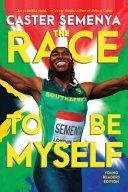 The Race to Be Myself Young Readers Edition
Nonfiction / South Africa / Ages 14-18
May 20, 2025
221 pp.

In this memoir for young readers, Olympic champion runner Caster Semenya reflects on her groundbreaking career and her fight for identity in professional sports.
The Race to be Myself (Young Readers Edition) by Caster Semenya is a memoir that goes far beyond the details of the author’s life and experience. It is at once a story of acceptance, achievement against many odds, defiance, perseverance, and the reclamation of personhood, brilliantly told in a way that young readers can relate to and understand. Caster Semenya has succeeded in adapting her autobiography of the same name (published in October 2023) for readers of middle- and high-school ages. Born Mokgadi Caster Semenya in the small, remote village of Ga-Masehlong, located in Limpopo, South Africa in 1991, Caster Semenya became one of the most recognized names in sports when she emerged on the international track and field scene in 2009 at the World Championships in Berlin, Germany at the age of eighteen. This book is an enduring account of her early life, her unprecedented career as an athlete and the unfortunate events that compromised it.
In nineteen short chapters, some of which include personal photos, readers are welcomed to share Semenya’s joys and challenges. The first four chapters highlight life in the village and the beginning of her “race”. The village, Semenya’s family and friends, and even her name are described in culturally specific detail, which gives readers an excellent introduction to the region, its languages, and the political climate of the time (apartheid would begin to be undone a mere three years after Semenya’s birth). This part of the book also introduces readers to the physical differences and gender expectations that would become a hallmark of Semenya’s athletic trajectory. Chapters five through eleven focus on her development as a runner and the support she received along the way, from her parents to academic teachers, and coaches. Semenya’s family never wavered in their support, even when they were finally able to put a name to what made her so different.
The final chapters of The Race to be Myself are dedicated to Semenya’s life as a professional athlete and beyond. They focus on Semenya’s humanity and enduring spirit despite adversity, which is a definite strength of this book. The challenges that she faced did not stop her from pursuing her dreams, they fueled her desire to do what she believed she was born to do. Despite efforts to thwart her aspirations and diminish her accomplishments, Semenya crafted her career on her own terms by pursuing every race that she could and winning!
While this book referenced “God” and “ancestors” and “tradition” only lightly, readers can nevertheless perceive an enduring faith held by Semenya and her family, without any proselytizing language, which is quite refreshing!
This book reminds us of what it means to be human, committed to our dreams, and unapologetic in our acceptance of others and of ourselves. It also highlights the lengths to which organizations will go to preserve a status quo that is designed to categorize human beings according to definitions that are outdated and have historically excluded groups that differ from what is considered “the norm”. Caster Semenya succeeded in surpassing perceived limitations, and proved that endurance, defined by Alex Hutchinson (Endure: Mind, Body, and the Curiously Elastic Limits of Human Performance, 2021) as “the struggle to continue against mounting desire [and dare I say duress] to stop”, is a human characteristic that can be embraced by all.
I highly recommend this book for readers of all ages.
Elana Denise Anderson, PhD
University of New Mexico, Albuquerque
Published in Africa Access Review (December 2, 2025)
Copyright 2025 Africa Access